US
World
Politics
Business
Health
Entertainment
Tech
Style
Travel
Sports
Science
Climate
Weather

Health · 5 min read
Sponsored Content
Ohio mom, 61: "my granddaughter asked why my feet were so puffy"
If your socks leave deep marks by evening, this is the 30-second routine she now does twice a day.

By Katherine Whitmore
Published Sat July 5, 2026

Jane noticed it first in her own kitchen.
Her legs had felt heavy and tight all day — the kind of heavy that makes you sit down halfway through cooking dinner.
"I was cooking spaghetti for my family," she says. "By the time we sat down, my socks had cut deep rings into my ankles. I had stopped even looking at my feet by then."
Her voice softens. "What finally got me was my son asking why I never stood up to dance at family parties anymore."
Puffy ankles, heavy legs and deep sock marks by evening are one of the most common complaints women over 50 bring to their doctor.
And the usual advice — put your feet up, cut the salt — rarely changes much by the following evening.
So what is actually going on?
This is not a medical treatment and it will not replace your doctor’s guidance — it is a daily support routine some women have added to theirs.
The vitamin behind the drain ritual
For many women, this comes down to a plant nutrient that modern diets supply very little of — one studied for its role in supporting normal capillary function.
Women who add it to their evening routine most often describe the same thing: legs that simply feel lighter at the end of the day. Individual results vary.
Some mention the tight, puffy feeling in the feet easing within the first week.
For others, the evening heaviness in the legs is the first thing they notice.
Many mention shoes and socks feeling more comfortable at the end of the day.
How quickly anyone notices a difference varies from person to person.
It works on the part of the picture most evening routines never touch: the vein walls themselves.
The hidden cause of swollen legs
Researchers describe it as “leaky veins.”
In one study, doctors examined the veins of women with swollen legs under a strong microscope. When they zoomed in, they saw something disturbing.
The women’s veins had tiny holes.
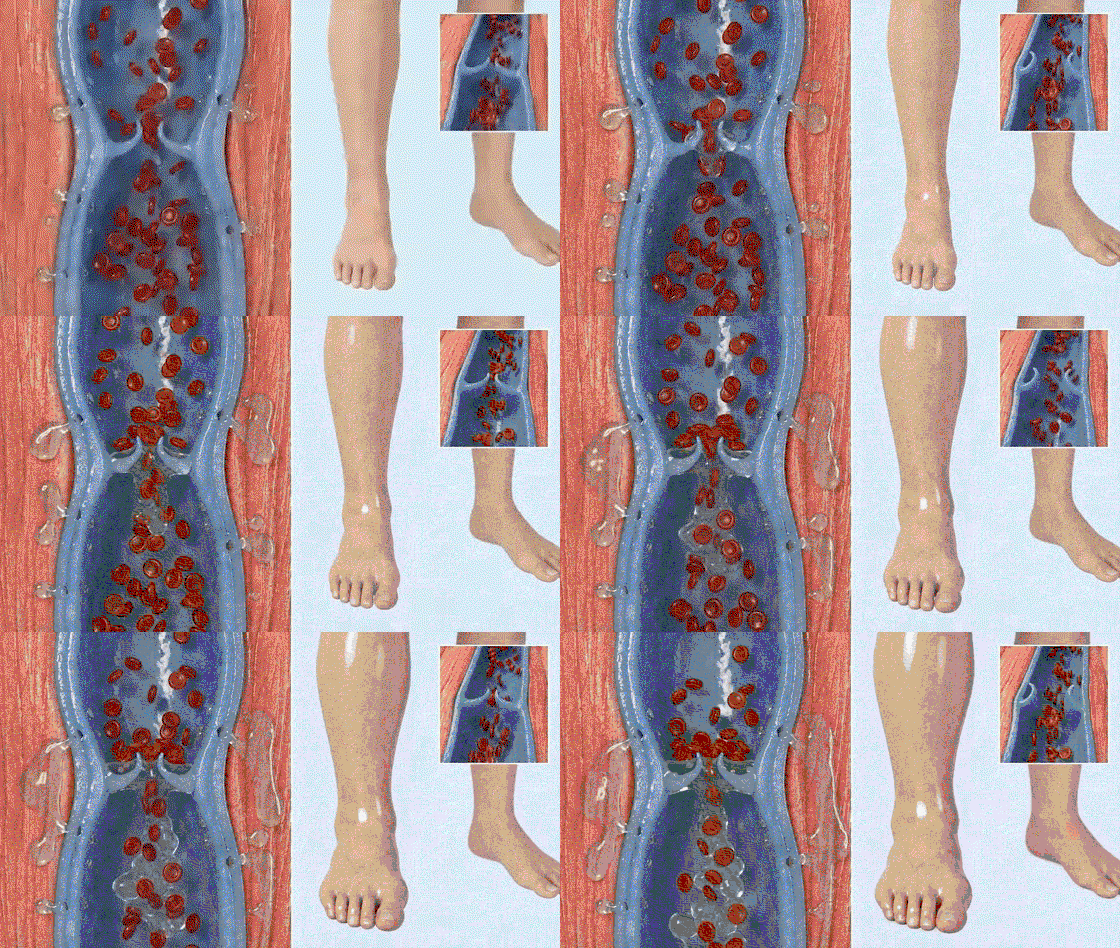
Fluid from the blood was leaking out — and pooling inside the legs, ankles, and feet.
Just like a leaky pipe flooding the floor.
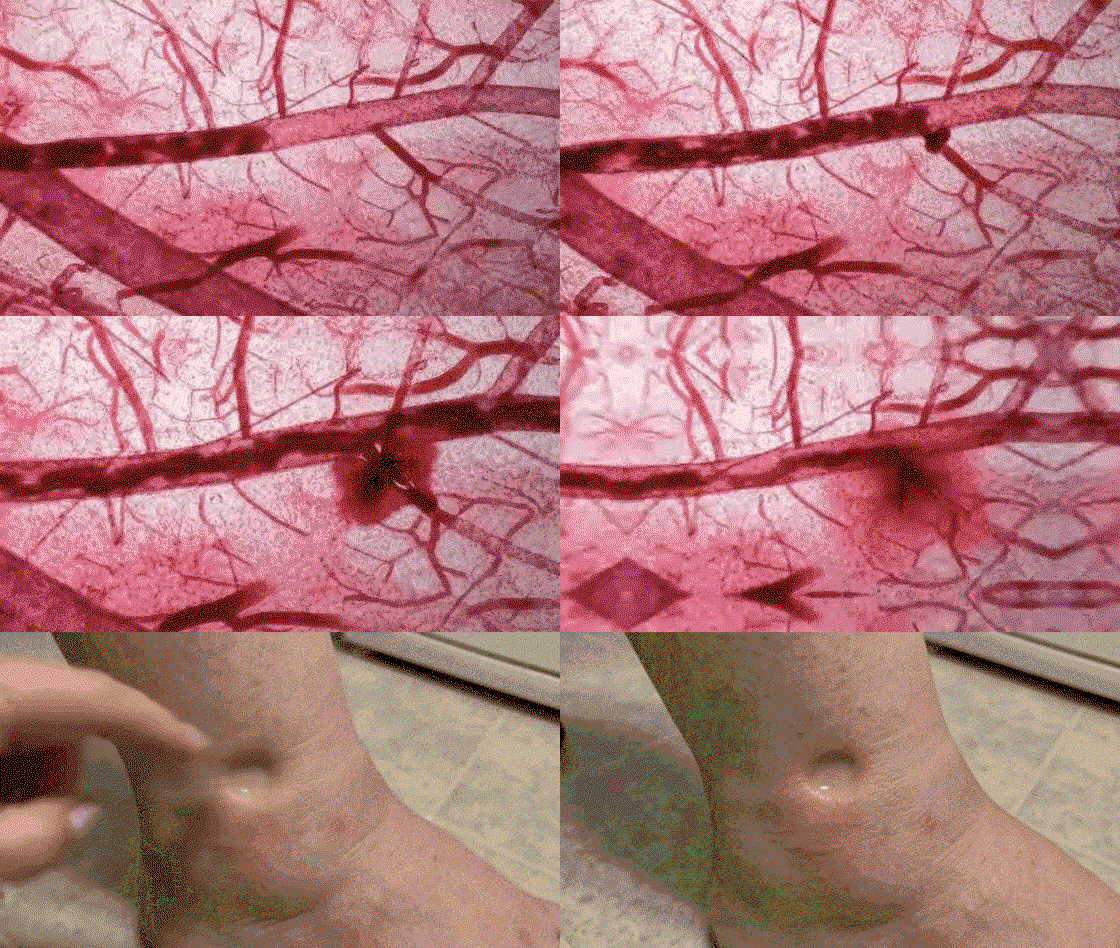
Under magnification, small holes open in the vein wall where fluid escapes into surrounding tissue.
Vascular researchers describe the same picture: vein walls that become more permeable over the years, letting fluid escape into the surrounding tissue.
And here’s why it’s such a problem.
Your body has around 60,000 miles of veins, enough to wrap the Earth twice.
Now picture the veins in your legs leaking. Day and night.
Scientists even captured it on camera:
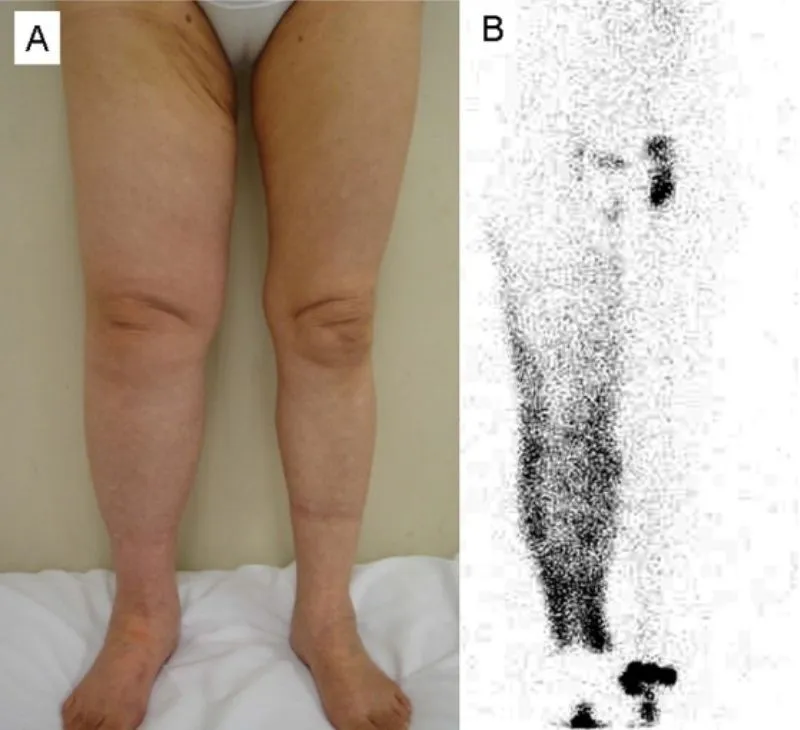
On the scan at right, the dark regions mark areas where fluid has leaked and collected.
The body can hold a surprising amount of extra fluid before any puffiness is visible at all.
Which means by the time you notice it — heavy legs, sock marks, tight shoes — the legs, ankles, and feet are already flooded.
Why the veins begin to leak
For most women, it’s not a single thing — it’s a few, quietly building over the years. Here are the most common:
1
Menopause and hormones
Estrogen helps keep your vein walls firm. As it drops during menopause, the walls weaken and stretch — until tiny holes open and fluid begins to leak out.
2
Extra weight
Every extra pound adds pressure inside your leg veins. Over time, that constant push wears down the walls, until fluid starts to escape.
3
Blood pressure medication
Some common blood pressure pills work by widening the blood vessels. That same effect can let fluid settle in the lower legs. Never change or stop a prescription without talking to the professional who prescribed it.
4
Age
Your veins are under pressure every day, for decades. Eventually the walls thin, tiny holes open, and fluid begins to leak out into your legs.
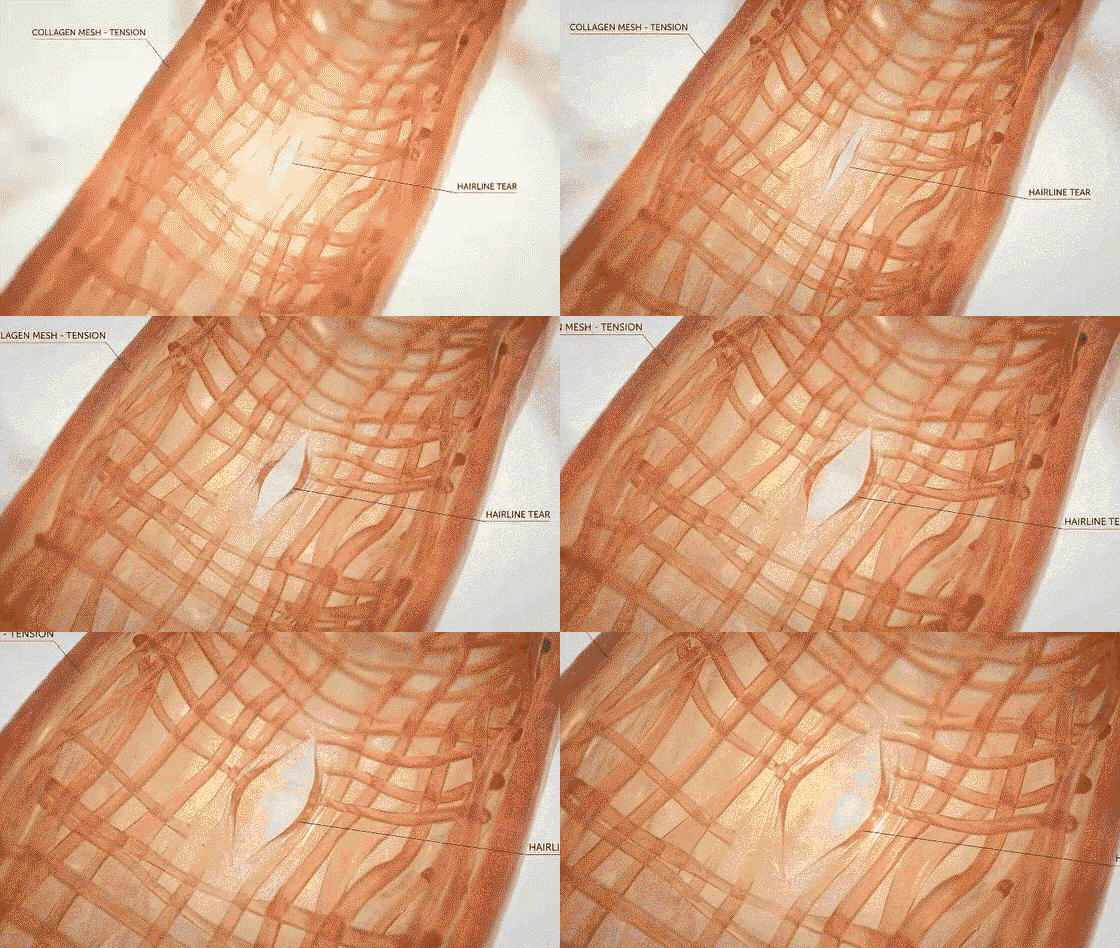
That’s why the usual advice never works. Elevate your feet, wear compression socks, cut salt — it just moves the fluid around for a few hours, while the veins keep leaking all day. So by evening, the swelling is back.
Signs your veins are leaking
Legs & ankles
Ankles swell by evening
Heavy legs by evening
Sock marks
Legs feel tight
Face & hands
Puffy face in the morning
Puffy eyelids in the morning
Rings feel tight on your fingers
The Nobel Prize winner who named Vitamin P

Dr. Albert Szent-Györgyi, awarded the Nobel Prize.
The human body needs vitamins to work.
Your heart needs potassium to beat.Your brain needs vitamin B to think.Your skin needs vitamin C to stay firm.
Your veins need the right vitamin too.
It’s called Vitamin P.
It was discovered by Nobel Prize–winning scientist Dr. Albert Szent-Györgyi. He named it “P” for permeability — for its role in how much fluid the walls of the smallest vessels let through.
Compression socks and water pills work on the fluid. Vitamin P is studied for its support of the vessel walls themselves.
There was just one problem: At the time, Vitamin P was rare.
Then decades later, scientists found one of the world’s richest sources of Vitamin P — a deep-red extract from the bark of French pine trees.

French pine bark extract has been studied for its role in supporting healthy circulation and normal capillary function.
In that research the comment that came up most often was simple: legs that felt lighter and less tired. Individual results vary.
How Vitamin P supports the vein walls
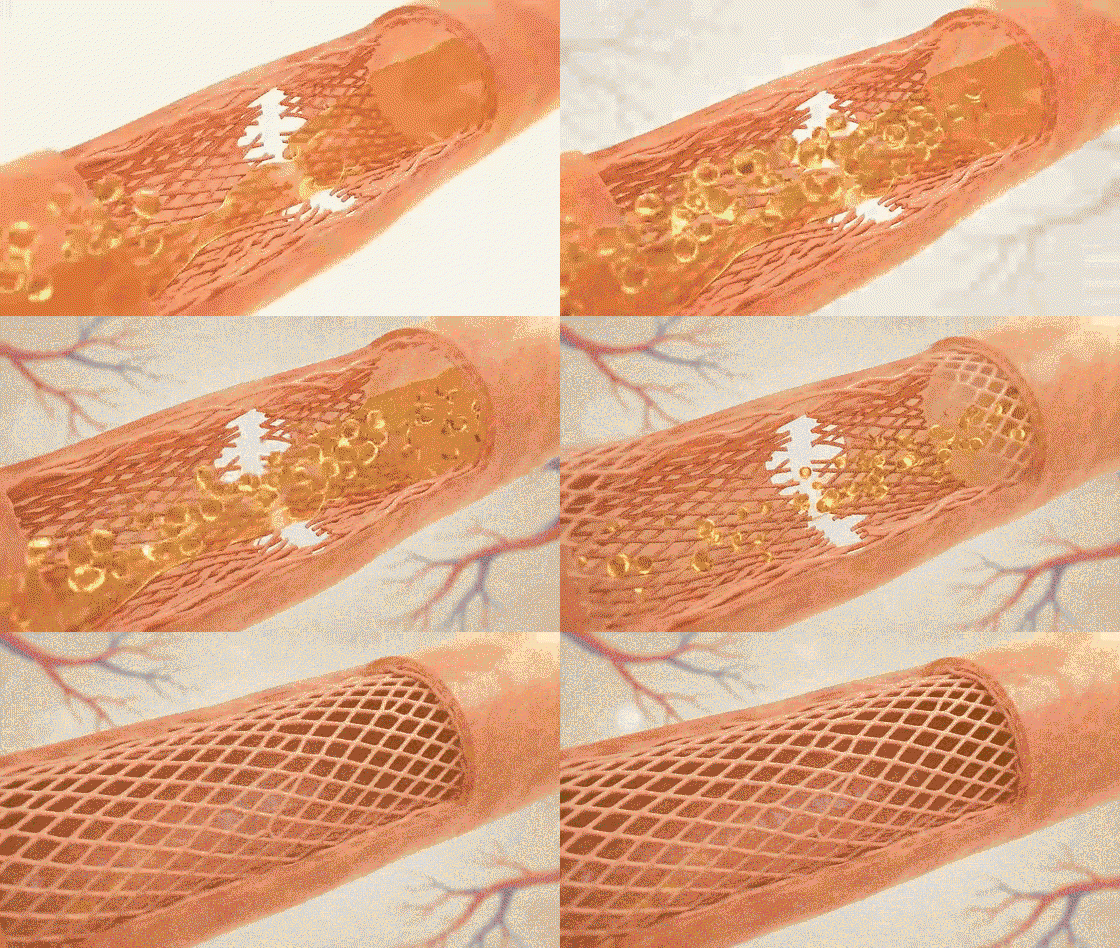
Vitamin P supports the collagen in the vein wall
Your vein walls are held firm by collagen — the same protein that helps keep your skin tight.
As you age, that collagen weakens. Your vein walls turn fragile. Tiny holes open, and fluid start leaking out of your veins and pooling in your ankles, calves, and feet.
Vitamin P is studied for its support of that collagen, helping the walls stay firm — so fluid is better kept where it belongs instead of settling in the legs.
Vitamin P protects your veins from new leaks
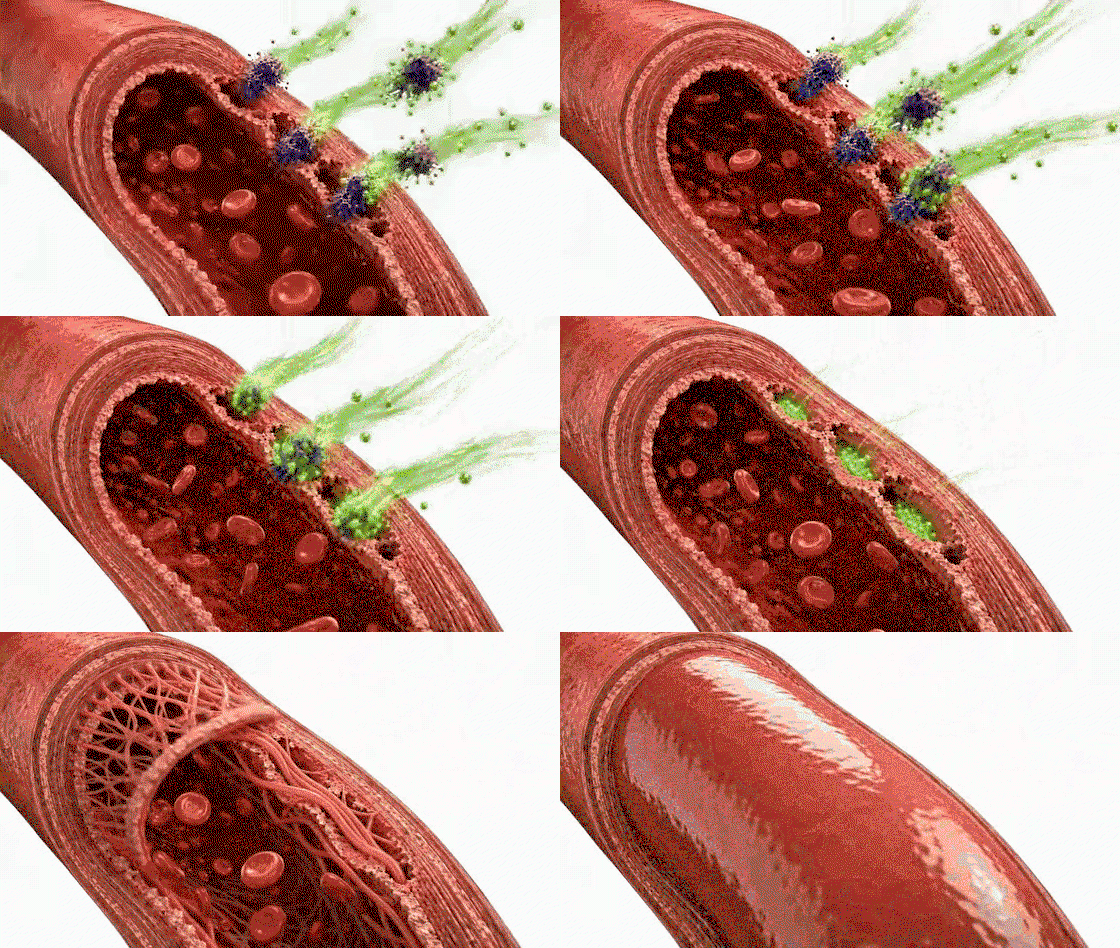
There are enzymes in your body that slowly eat away at collagen, opening new holes in the walls over time.
Vitamin P is studied for its support of the collagen matrix against that everyday breakdown.
What women reportedover eight weeks
In feedback collected from women who used Vitamin P — from the bark of French pine trees — for eight weeks, this is the pattern most often described.
Here’s what changed:
Week 1
The first days
Some women mention a couple of extra trips to the bathroom in the first days.
Week 2
Socks and shoes
Sock marks less noticeable. Shoes feeling easier at the end of the day.
Week 3
Feeling lighter overall
With less fluid settling through the day, many describe feeling less puffy overall and more comfortable in their clothes.
Week 4
Evenings
By this point most describe the evening heaviness as much less of a daily event.
Week 8
Eight weeks in
The women who kept the routine going most often said they simply stopped thinking about their legs. Individual results vary.
“Honestly, my ankles haven’t looked this good in years. By the end of the day they used to be so tight and swollen. Now they just don’t do that anymore. I’m really happy with it.”

Margaret K., 63
Sacramento, California
“My legs feel so much lighter. I actually stopped wearing my compression socks a few weeks back and didn’t even realize it. It’s been a nice surprise.”

Patricia L., 58
Naples, Florida
“That heavy, aching feeling I’d get by evening? It’s gone. I can be on my feet all day now and I don’t dread it anymore. Made a real difference for me.”

Barbara R., 66
Savannah, Georgia
What women mention beyond their legs
Women who stay with the routine often mention more than their legs. These are the comments that come up most — personal experiences, not typical or guaranteed results.

More energy that lasts all day
Better sleep and less daily strain leave the body more rested.
Clearer-feeling days
Some describe feeling sharper and less foggy through the afternoon.
Less puffy overall
Supporting healthy fluid balance is something women say they notice in the way clothes feel.
Less morning puffiness
A common comment is simply that the face looks less puffy in the morning.
Easier mornings
Feeling lighter on their feet is the way many of them put it.
Where to get vitamin P today
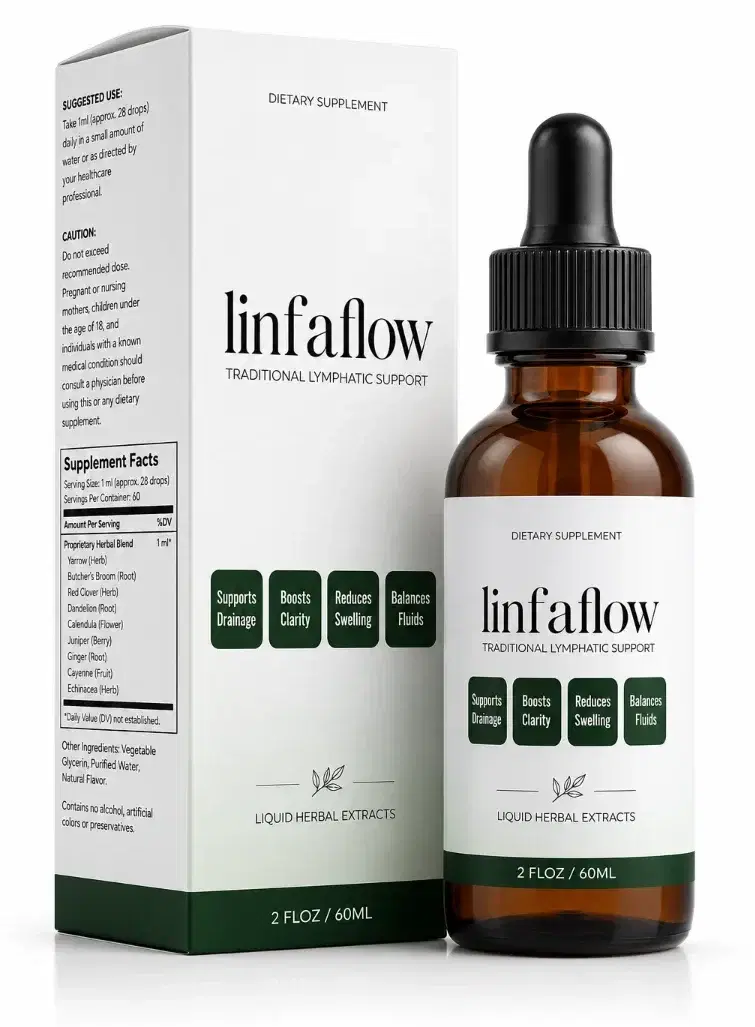
Today Linfaflow is the only U.S. brand offering the original Vitamin P formula, made from French Pine Bark extract.
Linfaflow is made right here in the U.S., with every batch tested in an FDA-registered facility.
To keep it affordable and make sure you get the real formula, Linfaflow is not sold on Amazon, Walmart, or in drugstores. It’s available only through the official website. Tap below to get your Linfaflow.
At a Glance
Linfaflow
4.8
★★★★★
13,428 ratings
Best for
Puffiness and heaviness in the legs, ankles and feet.
Ingredients
Vitamin P from French Pine Bark Extract
How to use
One dropper under the tongue, twice a day
Quality
FDA-registered facilityGMP-certified
Guarantee
60-day money-back guarantee
The guarantee
Try Linfaflow for 60 days risk-free. If you are not happy with how you feel, you will receive a prompt, full refund — no questions asked. And you keep the bottles.
For a full refund, call +1 (800) 390-6035 or email support@linfaflow.com.
How to get 70% off today
To introduce Linfaflow to more women, they’re offering readers an exclusive 70% off through this page. If the official order page is still active, the discount is still available.
In their words
What women who use Linfaflow told us
We spoke with several longtime Linfaflow users to hear, in their own words, how it has gone for them. Their experiences varied, but the same themes came up again and again. Here is what three of them shared. These are individual experiences and are not typical or guaranteed results.

“I’m on my feet all day behind the chair. By closing time my ankles were so swollen my socks left deep rings. Within the first week, I already felt the tightness starting to ease. By week three I could see my ankle bones again. I actually stopped and stared in the mirror. My shoes slide right on in the morning now. I keep telling the girls at the salon about it.”

Carol Mercer, 61
Columbus, Ohio
“I’ll be honest, at first I wasn’t sure I’d feel much. But by the end of the first week my legs already felt lighter at night. Then around week four I stopped propping them up on two pillows just to sleep. I don’t even think about it anymore. If you’re the type to give up early, don’t. Stick with it. I’m so glad I did.”

Diane Roberts, 55
Cleveland, Ohio
“My daughter got married in June, and I’d been dreading it for months. I pictured myself sitting the whole time while everyone else danced. I’d been taking the drops since early spring. I stood through the entire ceremony. I danced at the reception. And I woke up the next morning with legs that felt like my own again. I cried a little, honestly. That day meant everything to me.”